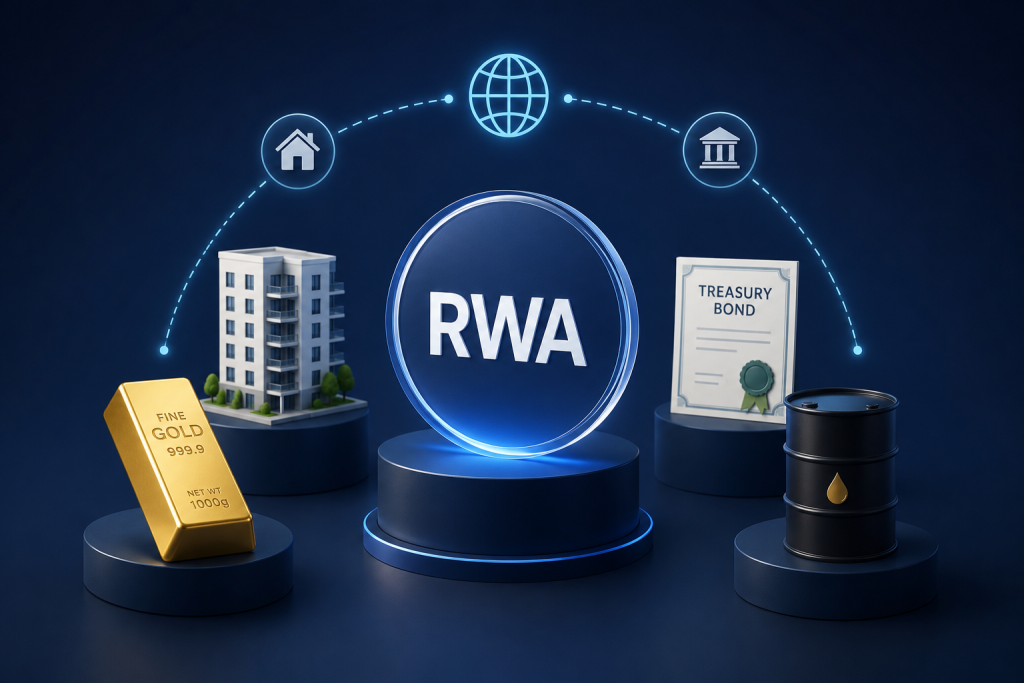
What Is Real World Assets (RWA) in Crypto?
Last Updated: May 11, 2026
Methodology: This analysis is based on 2026 on-chain data from RWA.xyz, institutional reports from BlackRock and Boston Consulting Group, and performance comparisons between tokenized commodities and traditional ETFs.
What is RWA in crypto?
Real World Assets (RWA) in crypto represent blockchain-based tokens that signify ownership of physical or traditional financial assets. These tokens represent gold, real estate, or government bonds. Consequently, these digital representations allow users to trade, fractionalize, and integrate physical value into decentralized finance (DeFi) ecosystems.
Quick Summary:
- Definition: Tokenized ownership of physical assets on blockchain
- Access: 24/7 global trading without intermediaries
- Efficiency: Lower costs and instant settlement
Real-World Example:
Instead of buying and storing physical gold, an investor can purchase a token like XAUT, which represents ownership of physical gold stored in a secure vault. This token can be traded instantly, just like any cryptocurrency.
Is RWA crypto safe?
RWA is generally considered more stable than purely speculative crypto assets because it is backed by tangible value. However, safety depends on:
- Custody transparency: Whether the underlying asset is verifiable
- Legal structure: Use of SPVs to enforce ownership rights
- Oracle reliability: Accurate price feeds from off-chain to on-chain
Why Is RWA Trending Now? (2026 Market Shift)
The RWA sector has moved from experimentation to institutional adoption. In 2026, the market has surpassed $24 billion in total value locked (TVL).
Key Drivers:
- 1. Institutional Adoption
BlackRock’s BUIDL fund and similar initiatives have legitimized tokenized assets. - 2. Sustainable Yield
Unlike traditional DeFi yields, RWA generates returns from real-world sources like rent, interest, and dividends. - 3. Global Accessibility
Users can now access assets like US Treasury bonds directly from blockchain platforms.
How Does Asset Tokenization Work?
RWA connects physical assets to blockchain systems through a structured process.
The 4-Step Lifecycle:
- Asset Verification (Origination)
The physical asset is audited and secured. - Legal Structuring (SPV Setup)
A Special Purpose Vehicle ensures legal ownership rights. - Token Issuance (Minting)
Tokens are created to represent the asset. - Price Synchronization (Oracles)
Real-world data is continuously updated on-chain.
Traditional Assets vs Tokenized RWAs
| Feature | Traditional Finance | RWA (Crypto) |
| Access | Limited | Global |
| Trading Hours | Business hours | 24/7 |
| Settlement | 2–3 days | Instant |
| Transparency | Low | High |
| Minimum Investment | High | Low |
Top RWA Categories in 2026
- Tokenized Commodities
Gold, silver, and oil tokens provide inflation hedging and liquidity. - On-Chain Treasury Bills
Stable yields from government bonds directly in DeFi. - Real Estate Tokens
Fractional ownership of property with rental income exposure.
Tokenized Gold vs Traditional Gold Investment
| Factor | Physical Gold / ETF | Tokenized Gold (RWA) |
| Liquidity | Limited hours | 24/7 trading |
| Storage | Required | Not required |
| Accessibility | High capital needed | Fractional access |
| Usage | Passive holding | Tradable & usable in DeFi |
Risks of RWA (What You Should Know)
Despite strong fundamentals, RWA introduces specific risks:
- Regulatory Risk: Different countries apply different rules
- Custodial Risk: Trust in asset storage providers
- Oracle Risk: Incorrect pricing data
How to Start Trading RWA
Getting started is straightforward:
- Deposit stablecoins such as USDT or USDC
- Navigate to RWA or commodities section
- Select assets like gold or silver tokens
Start Trading Tokenized Commodities
Looking to diversify your portfolio with real-world value?Trade tokenized gold (XAUT), silver (XAGX), and oil with 24/7 liquidity and advanced trading tools on ICRYPEX.
Related Guides
To better understand how RWA fits into the broader crypto ecosystem:
- Crypto Market Cycles Explained
- What Is On-Chain Analysis?
- Hot Wallet vs Cold Wallet: Which Is Safer?
The Future of RWA
According to industry projections, the tokenized asset market could reach $16 trillion by 2030. RWA is expected to become a core component of both traditional finance and decentralized finance.